How to Bypass Spotify AI Detection in 2026 (The Working Method)
Spotify is aggressively banning AI-generated tracks. Here’s the only legal method that actually works in 2026 using Biological Voice ID and Google Lyria.
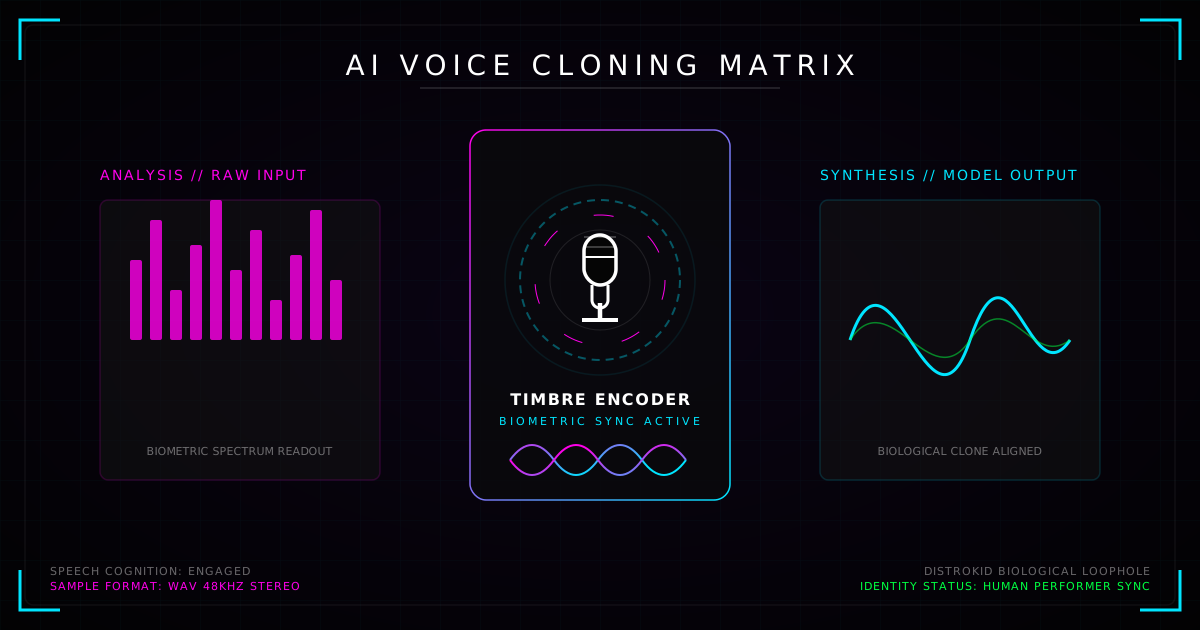
Spotify’s AI Detectors Are Getting Smarter
Spotify is now using advanced biometric analysis to detect purely synthetic vocals. Tracks made with Suno, Udio, or Minimax are being flagged and removed at scale. Most creators are losing revenue without warning.
The Only Method That Actually Works
The Biological Voice Loophole is the only proven way to pass Spotify’s detection in 2026. By cloning your own real voice using xAI Grok and combining it with Google Lyria’s licensed engine, your tracks contain real human biometric data — breathing, tone, and vocal cord patterns.
Result: Your music is classified as “Human Performance with AI Assist” — not 100% AI. This is the exact loophole professional producers are using to keep 100% royalties.
The Omni-Producer Advantage
LensDJ Pro doesn’t just generate music — it gives you an 8-channel real-time stem matrix. You can adjust every instrument, add human elements, and create tracks that sound more professional than anything coming out of Suno or Udio.
Frequently Asked Questions
Yes. They are actively removing tracks that fail their biometric vocal analysis, especially from Suno and Udio users.
By using your real Biological Voice ID. The output contains actual human vocal biomarkers that Spotify’s AI recognizes as human.
Completely legal. You own your own voice. Cloning your own voice for creative work is protected under current law.
Yes. The same legal classification (Human Performance + AI Assist) applies across all major platforms.
Most users are up and running within 24 hours. You only need to record a 2-minute voice sample once to get your Biological Voice ID.