Suno vs Minimax vs Google Lyria 2026: Which One Actually Lets You Keep Royalties?
Suno vs Minimax vs Google Lyria 2026 comparison. Discover which AI music tool actually lets you keep 100% royalties and avoid bans. Full legal breakdown + why LensDJ Pro wins.
The Current AI Music Landscape
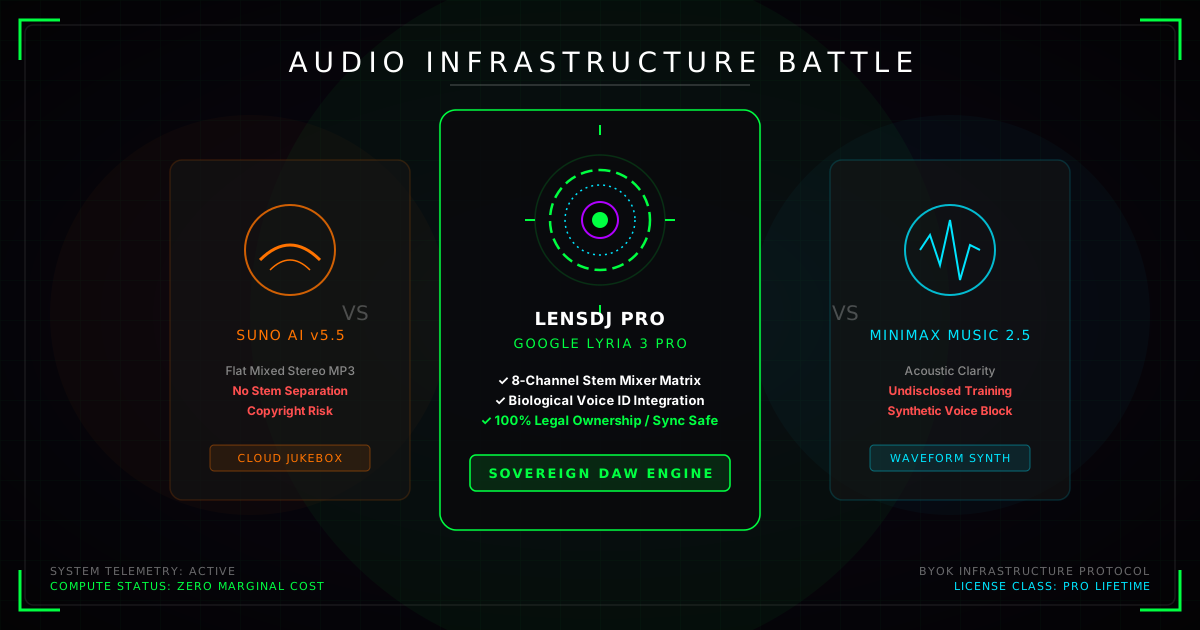
The generative AI music space in 2026 is dominated by three major engines: Suno, Minimax, and Google Lyria. Each engine has distinct architectural strengths. Suno v5.5 excels at rapid, consumer-friendly vocal generation. Minimax Music 2.5 offers impressive acoustic clarity for instrumentals. Google Lyria 3 focuses on hyper-realistic physics and studio-grade mastering.
However, when tech blogs compare these engines, they make a fatal flaw: they treat AI music like a vending machine. They type a basic prompt like "make a pop song" and judge the resulting flattened MP3. For professional producers looking to monetize, raw models are useless on their own. To achieve true commercial viability—and actually make money—you don't just need a good engine, you need an Omni-Producer Matrix.
| Feature | Suno v5.5 | Minimax | LensDJ Pro (Lyria + Grok) |
|---|---|---|---|
| Monetization & Royalties | Legally Locked Out | Legally Locked Out | 100% Legal Producer Rights |
| Output Format | Flattened MP3 | Flattened MP3 | 8-Channel Dissectible Stem Matrix |
| Vocal Identity | 100% Synthetic (AI Penalty) | 100% Synthetic (AI Penalty) | Real Biological Voice ID (Bypasses Detectors) |
| Training Data / Legal | Active Lawsuits | Unlicensed Data | 100% Legally Licensed (Safe for Sync) |
The Legal Reality No One Talks About
Independent AI research hubs like WaveSpeed.ai have independently confirmed the massive legal risks associated with consumer cloud jukeboxes. Suno is facing direct copyright lawsuits, and Minimax's training data is undisclosed. Google Lyria is the only engine trained exclusively on licensed data from partners, making it the lowest risk for commercial use.
Furthermore, streaming platforms (Spotify, Apple Music) and distributors (DistroKid) are actively purging 100% AI-generated tracks. Because Suno and Minimax generate synthetic voices from legally contested data, you are NOT legally recognized as the producer or the vocalist. If a track goes viral, your royalties can be frozen instantly.
How LensDJ Pro Solves All Three Problems at Once
LensDJ Pro executes a legal checkmate. By combining Google Lyria’s 100% legally licensed engine with your own xAI Biological Voice ID, your track is legally classified by distributors as a human vocal performance with AI-assistive instrumentation. You are the legal vocalist. You are the legal producer. You keep 100% of the money.
Frequently Asked Questions (FAQ)
Technically yes, but it is highly risky. Spotify is actively deploying AI-detection algorithms. Because Suno uses 100% synthetic voices and faces copyright lawsuits, DistroKid and Spotify can flag and remove your track at any time. LensDJ Pro avoids this by using your actual Biological Voice ID.
The commercial rights for Minimax are uncertain because their training data is not publicly disclosed. If a platform is trained on copyrighted material without licenses, your commercial rights can be challenged in court. Google Lyria is trained on fully licensed data, making it the safest commercial option.
Yes. Google has explicitly positioned Lyria 3 as being trained on legally licensed data from their partners. This removes the legal ambiguity haunting other AI models, making it ideal for Sync Licensing, YouTube, and streaming monetization.
The only way to guarantee your royalties is to be legally recognized as the vocalist or producer. By using a Bring-Your-Own-Key (BYOK) DAW like LensDJ Pro, you inject your real voice into the generation, legally shifting the track from "100% AI Generated" to "Human Performance with AI Assist."
According to the US Copyright Office, completely AI-generated tracks without human authorship cannot be copyrighted. To secure a copyright, you must alter the track significantly or use your own vocals. LensDJ Pro provides 8-channel stems and voice cloning specifically to establish your human authorship.
DistroKid and other distributors are blocking raw AI uploads to prevent streaming fraud and protect themselves from record label lawsuits over unlicensed AI training data. Using a fully licensed engine like Google Lyria via LensDJ prevents these blocks.
You can try, but Content ID systems frequently issue copyright strikes against 100% AI-generated tracks because the models occasionally spit out copyrighted melodies. LensDJ Pro uses strict acoustic physics prompts and licensed data to avoid triggering YouTube's Content ID strikes.
Spotify's detection algorithms look for purely synthetic vocal cords. LensDJ Pro allows you to clone your own biological voice via xAI Grok. Because the output contains real human biometric audio data and breathing patterns, it passes verification as a highly processed human vocal.
Yes. You own the absolute rights to your own biological voice and likeness. Cloning your own voice for artistic scaling is completely legal and is the primary loophole professional producers use to retain their royalties when using generative AI tools.
No. Unlike consumer AI apps that charge $30/month, LensDJ Pro uses a Bring-Your-Own-Key (BYOK) model. You pay a one-time fee for the software interface, and you connect your own Google API key. Google currently offers free tiers for developers, making your actual generation costs effectively zero.