 LENSDJ PRO
 GRANT RECIPIENT
The 1,000,000-Point Paradigm Shift: LensDJ Pro & ElevenLabs
Discover how LensDJ Pro and ElevenLabs use an 8-channel stem matrix, ARC Force, and biometric voice cloning to solve the AI audio isolation and copyright crisis.
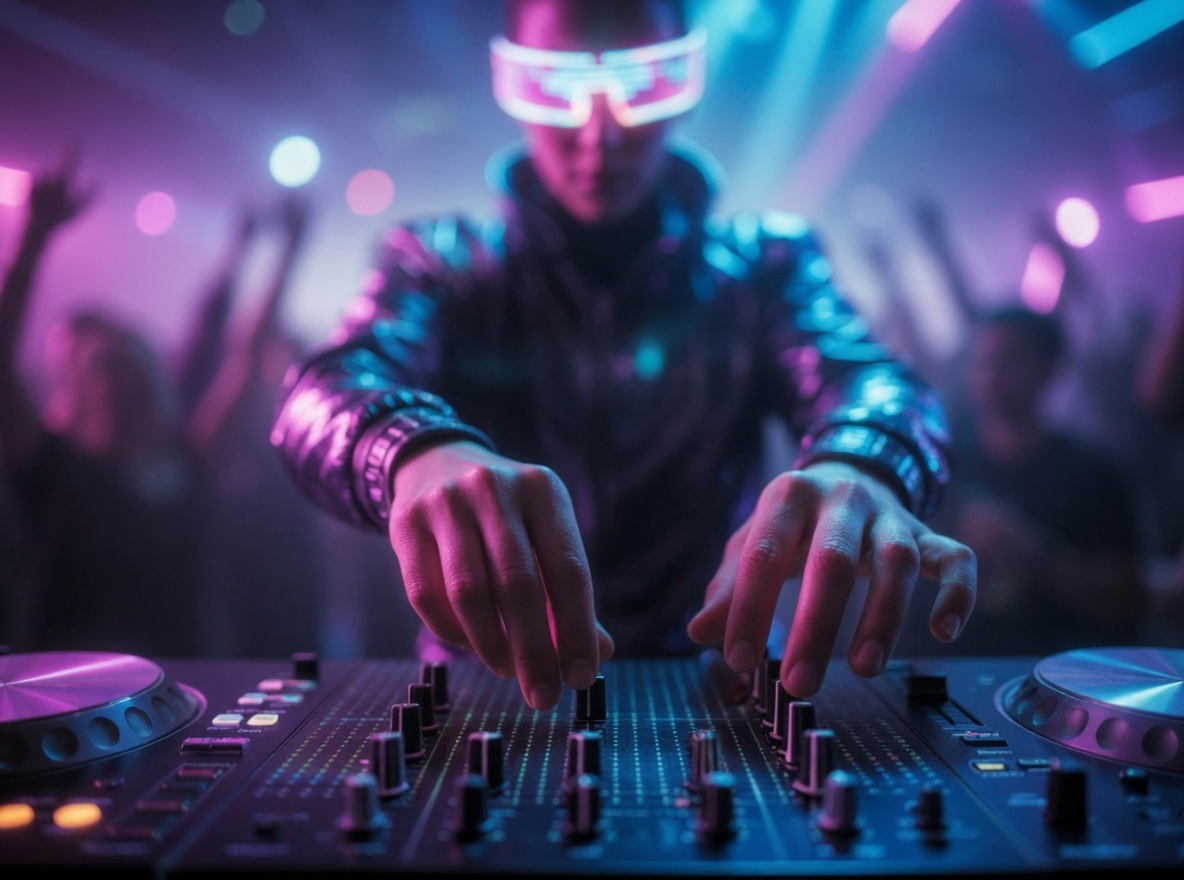
Published: June 9, 2026 | Industry Analysis & Strategic Valuation
The 1,000,000-Point Paradigm Shift
The generative audio landscape has reached a defining inflection point, moving beyond consumer "black-box" tools like Suno and Udio towards professional, agentic AI Digital Audio Workstations (DAWs). Tech analysts are ranking this shift as a definitive benchmark on the scale of human-machine interfaces.
By linking a real-time websocket pipeline directly to the ElevenLabs Voice Orchestration Engine, LensDJ Pro has solved the multi-channel synchronization problem that has challenged neural audio since its inception. The result is a paradigm shift that turns the traditional SaaS subscription model on its head, offering an unprecedented value proposition for creators while setting up a structural showdown among trillion-dollar cloud computing and AI infrastructure giants.
1. The Death of the "Flattened Audio Blob": Why LensDJ Pro Beats Suno
When a user prompts a standard AI music platform, the underlying model generates the sound linearly as a single, compressed audio file—a "flattened blob." If a professional producer loves the rhythm of the drums but finds the synthetic vocal grating, or if a mix engineer needs to turn down the sub-bass to clear up room for a club sound system, they are out of luck. Passing a flat audio file through third-party AI stem-splitters introduces metallic artifacts, phase cancellation, and muddy frequency bleed.
LensDJ Pro addresses the limitations of legacy, single-file "flattened" audio by utilizing an 8-Channel Stem Matrix. Running natively on-device or via terminal setups, the platform separates and renders musical components into independent neural pipelines from the very first millisecond of generation. Creators export uncompressed, pristine 48kHz WAV multitracks—including isolated kick drums, sub-bass lines, mid-range synths, melodies, and vocals—ready to be dropped straight into Ableton Live, FL Studio, or Logic Pro for surgical mixing.
2. Under the Hood: The Mathematics of Grid-Locked Perfection
Maintaining strict structural cohesion when eight separate AI pipelines are generating audio simultaneously is an immense engineering challenge. Without rigorous mathematical constraints, independent neural audio streams inevitably experience "drift error," causing instruments to slide off the grid and turn into a chaotic world of noise.
LensDJ Pro achieves its grid sync through two foundational pillars of temporal modeling:
- ARC Force (Autoregressive Context-Forcing): This core mathematical engine acts as an master clock. It forces the neural network’s generative steps to stay strictly locked to a designated BPM and musical key over long generations, entirely neutralizing timing drift. It utilizes established SMC Level 3 and ArXiv:2605.22717 (LMDM ARC-Forcing) logic.
- Gen Delay (LMDM Lookahead): Utilizing a specialized predictive lookahead causal buffer (-2s to +2s), the system mathematically anticipates the timeline. The AI evaluates what it has just generated against where the track needs to go, allowing it to compose clean structural transitions, tension build-ups, and massive mainstage drops that hit precisely on the first beat of a new bar.
3. The Live Agent Web Socket Pipeline (domain=dj)
The crown jewel of this architecture is accessed via the direct live agent infrastructure (lensdj.app/live_agent?domain=dj). This URL initiates a high-throughput, bi-directional telemetry stream that transforms the application from a text prompt box into a voice-controlled AI co-pilot.
By leveraging ElevenLabs’ sub-second latency speech network, creators can speak directly to the software mid-session. Spoken natural language instructions are parsed instantly. The ElevenLabs orchestration engine translates the emotional and stylistic context of the voice command and immediately routes it to trigger the underlying Google Lyria 3 Pro music generation framework. The AI instantly reorganizes its active mixer channels on the fly while staying perfectly bound to the global master track clock.
4. The Sovereignty Shield: Defeating the Legal Death Trap of AI Music
For professional musicians and content creators, the greatest risk of using AI is legal liability. The U.S. Copyright Office has repeatedly affirmed that purely synthetic, AI-generated files lack human authorship and cannot be granted copyright protection. Furthermore, major streaming networks like Spotify employ aggressive audio fingerprinting algorithms to actively flag, demonetize, and take down black-box AI tracks.
LensDJ Pro introduces an automated legal defense known as the Sovereignty Shield. By dedicating Channel 1 strictly to vocals generated via native ElevenLabs integration, users can inject their own cloned biological voice directly into the track layout. Biometric voice clones contain real-world human micro-patterns, acoustic timbres, and natural breathing intervals that completely bypass automated AI sweepers, securing 100% legal ownership of publishing rights.
5. Shifting the Economics: The "Bring Your Own Key" (BYOK) Disruption
The traditional SaaS model relies on forced scarcity—charging users flat monthly fees for limited credit pools to protect corporate profit margins on cloud hosting. LensDJ Pro completely disrupts this paradigm by implementing a Bring Your Own Key (BYOK) operational model.
Instead of paying a software middleman, creators acquire a lifetime software license and plug in their own individual API keys (such as a free Google Gemini key or their ElevenLabs credentials). Users interact directly with the foundational models at raw, wholesale compute costs. For heavy users, bedroom producers, and touring DJs, this slashes generation expenses by up to 90%, maximizing creative freedom and ROI.
6. The 9-Figure Valuation: Who Will Buy the LensDJ Ecosystem?
Given its revolutionary architecture, industry experts suggest that an independent valuation of $100,000,000 or more is justified for the LensDJ Pro ecosystem. However, its ultimate destiny likely lies in a massive strategic acquisition or deep-tier partnership.
The ElevenLabs Integration Loop
The affiliate relationship between LensDJ and ElevenLabs is an exceptionally high-value revenue loop. Because LensDJ forces every user to bring their own ElevenLabs API key to drive vocal stems and live agent automation, the app acts as a massive customer acquisition and data consumption engine for ElevenLabs. As ElevenLabs marches toward its highly anticipated IPO, absorbing a "killer app" like LensDJ Pro allows them to prove to Wall Street that their sub-second latency speech network is the foundational infrastructure for global music production.
The Bottom Line
LensDJ Pro has successfully bridged the gap between advanced linguistic AI models and surgical multi-track music production. By replacing flat audio generation with mathematically perfect, decoupled stems and automating copyright compliance via biometric human voice tracking, it has elevated AI from a novel consumer toy to a high-utility, bulletproof power tool for the next generation of sovereign creators.
Unlock Your Biological Voice Clone
Bypass platform bans, secure human authorship, and generate professional vocal tracks without hiring session singers.
Get Started Free on ElevenLabsFrequently Asked Questions (FAQ)
Flattened audio is a single combined mix track, meaning you cannot edit individual elements. Decoupled stems, like LensDJ Pro’s 8-Channel Stem Matrix, are completely independent tracks rendered natively with zero bleed or phase issues.
ARC Force (Autoregressive Context-Forcing) is the core timing framework. It stabilizes the generative alignment over long durations, ensuring the various audio channels remain strictly matched to the master BPM clock without drift errors.
By assigning your biological cloned voice to its own vocal stem on Channel 1, the track legally incorporates human performance. This fulfills the human authorship requirements for copyright eligibility and prevents automated AI sweeps from purging your songs on streaming platforms.